
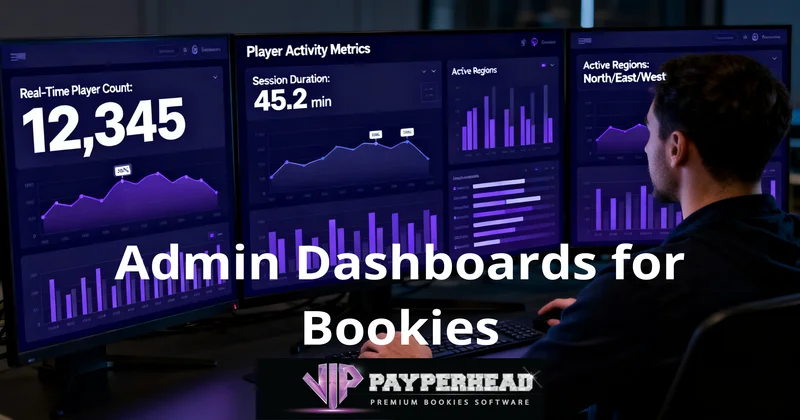
Sportsbook admin dashboards are the main interface that operators use to manage their Pay Per Head software platform. These dashboards connect directly to the system and allow operators to monitor activity, control workflows, and access real-time data.
For operators, understanding sportsbook admin dashboards is essential when evaluating software. To understand the full platform structure, they should explore Pay Per Head Software: Infrastructure That Powers Bookies. The dashboard defines how easily they can interact with the platform. It also determines how quickly they can respond to system activity.
A modern pay per head dashboard is not just a visual panel and works together with Sportsbook Platform Architecture to support system interaction. Instead, it is a structured control environment where multiple system functions are accessible in one place. Because of this, dashboard design plays a key role in operational efficiency.
In addition, dashboards act as the bridge between backend systems and operator interaction, as explained in Core Infrastructure Inside Pay Per Head Software. They translate system data into clear and usable information. This allows operators to manage their sportsbook without dealing directly with complex backend processes.
For this reason, the quality of the dashboard directly impacts how effective the platform is in real operation.
Core Features of a Pay Per Head Dashboard
A professional sportsbook admin panel includes several core features that support daily operations. Each feature is designed to provide control, visibility, and system access.
Centralized Control Interface
The dashboard provides a centralized control panel where operators can manage the entire platform. Instead of switching between tools, all functions are accessible in one place.
This centralization simplifies workflows. It also improves system navigation and reduces operational complexity.
Real-Time Data Display
Real-time data is one of the most important features of a sportsbook reporting dashboard. Operators must see system activity as it happens.
Because the dashboard connects directly to backend systems, data updates automatically, as defined in Backend Systems for Pay Per Head. This ensures that operators always work with current information.
Structured Data Views
Dashboards organize system data into clear and structured views. This allows operators to understand information quickly.
Instead of reviewing raw data, operators see organized insights. This improves decision speed and reduces confusion.
Interactive Control Tools
A bookie management dashboard includes tools that allow operators to interact with the system. These tools support configuration changes and system adjustments.
Because these tools are integrated into the dashboard, operators can take action without leaving the interface.
Real-Time Data and Dashboard Visibility
Visibility is one of the main advantages of sportsbook admin dashboards. Operators need to see system activity clearly and continuously.
A real-time sportsbook dashboard provides:
- Live system updates
- Clear data representation
- Immediate access to information
- Continuous system visibility
Because of this, operators can monitor the platform without delays.
In addition, visibility improves system awareness. Operators can identify changes quickly and maintain control over operations.
Without real-time visibility, dashboards lose their value. Operators would need to rely on delayed information, which reduces efficiency.
Operator Control Through Admin Panels
Admin dashboards are designed to provide direct system control. This control is not limited to viewing data. Instead, it allows operators to manage how the platform operates.
Through the sportsbook control panel, operators can:
- Monitor system activity
- Adjust platform settings
- Access reporting tools
- Manage operational workflows
Because control is centralized, operators can manage their sportsbook from one interface. This reduces the need for external tools.
Additionally, centralized control improves workflow efficiency. Operators can complete tasks faster and with fewer steps.
Dashboard Interface as a System Interaction Layer
The dashboard acts as the interaction layer between the operator and the backend system. It converts system processes into clear visual elements.
This interaction layer ensures that operators do not need technical knowledge to manage the platform. Instead, they can use the dashboard to control system behavior.
Because of this, the interface must remain simple and responsive. A complex dashboard creates friction. A clear interface improves usability.
Furthermore, a well-designed interface supports faster navigation. Operators can access key functions without delays.
Transition to Reporting and Workflow Efficiency
At this stage, sportsbook admin dashboards show their role in control, visibility, and system interaction. However, dashboards must also support reporting accuracy and workflow efficiency.
Operators depend on real-time sportsbook reporting to maintain control, which is supported by Player Account Infrastructure.
In the next section, we will examine how dashboards support reporting organization, workflow automation, and system performance within Pay Per Head software environments.
Dashboard Reporting and Data Organization
Dashboard reporting is a central function inside sportsbook admin dashboards. It allows operators to access structured information without relying on external tools.
In a professional Pay Per Head software platform, reporting is integrated directly into the dashboard. This means that all system data is available in one place. Because of this, operators can review activity without switching between systems.
A sportsbook reporting dashboard organizes data into clear formats. Instead of showing raw information, it presents structured views that improve understanding.
These views typically include:
- Organized activity summaries
- Real-time system updates
- Clear data segmentation
- Consistent reporting structures
Because reporting is connected to backend systems, it updates automatically. This ensures that operators always work with accurate data.
In addition, structured reporting improves workflow efficiency. Operators can locate information quickly and make decisions without delays.
Workflow Efficiency Through Dashboard Design
Dashboard design directly affects how operators manage their daily workflows. A well-structured sportsbook admin panel simplifies tasks and reduces unnecessary steps.
Efficient dashboards are designed with clear navigation. Operators can move between sections without confusion. This improves speed and reduces operational friction.
In addition, dashboards group related functions together. This allows operators to complete tasks without leaving the interface.
Workflow efficiency is supported by:
- Logical layout structure
- Fast access to key tools
- Minimal navigation steps
- Clear visual hierarchy
Because of this, operators spend less time searching for functions and more time managing the system.
Furthermore, efficient design reduces the risk of errors. When tools are easy to access, operators can complete actions with greater accuracy.
Role-Based Access Inside Admin Dashboards
Access control is a key feature inside sportsbook admin dashboards and is part of Agent Account Infrastructure. It defines how different users interact with the system.
In a Pay Per Head software platform, dashboards use role-based access. Each user is assigned specific permissions based on their role.
This structure allows operators to:
- Define access levels
- Control system visibility
- Limit feature usage
- Protect sensitive data
Because multiple users may interact with the platform, controlled access is essential. Without it, the system becomes difficult to manage.
In addition, role-based access improves operational structure. It ensures that users only interact with relevant parts of the dashboard.
Moreover, access control enhances system security. It prevents unauthorized changes and maintains platform integrity.
Dashboard Performance and System Responsiveness
Dashboard performance is a critical element of sportsbook admin dashboards. While design affects usability, responsiveness determines how the platform behaves under real conditions.
A responsive dashboard must load quickly and update data without delay. Because it connects directly to backend systems, performance depends on system architecture.
If the dashboard is slow, operators experience delays. This affects workflow efficiency and reduces system control.
A high-performance sportsbook admin panel provides:
- Fast interface loading
- Immediate data updates
- Smooth navigation
- Consistent system response
Because of this, operators can interact with the platform without interruptions.
In addition, responsive dashboards improve user experience. Operators can complete tasks quickly and efficiently.
Customization and Dashboard Flexibility
Customization allows operators to adapt sportsbook admin dashboards to their specific needs. This flexibility improves usability and workflow efficiency.
A flexible dashboard allows operators to:
- Adjust layout preferences
- Configure data views
- Prioritize key information
- Modify interface structure
Because of this, operators can create a workspace that fits their operational style.
In addition, customization improves productivity. Operators can access the most important information without unnecessary steps.
Furthermore, flexible dashboards support different operational models. They adapt to various workflows without requiring system changes.
Coordination Between Reporting, Access, and Performance
The effectiveness of sportsbook admin dashboards depends on how well different components work together. Reporting, access control, and performance must remain aligned.
When the system operates correctly, all components reflect the same data in real time. Reporting shows accurate information. Access control ensures proper usage. Performance keeps the system responsive.
This coordination allows operators to maintain full control. They can trust the dashboard because all elements are synchronized.
However, if coordination fails, inconsistencies appear. Data may not match across views. This creates confusion and reduces system reliability.
For this reason, dashboards must function as part of a unified system. Each component must support the others.
Transition to Integration and Daily Operations
At this point, sportsbook admin dashboards demonstrate their role in reporting, workflow efficiency, and system performance. However, these capabilities must also support daily operations and platform integration.
Operators rely on dashboards not only for visibility but also for managing continuous system activity.
In the next section, we will examine how dashboards support integration, scalability, and daily operational workflows within Pay Per Head software environments.
Dashboard Integration Within Pay Per Head Software
Sportsbook admin dashboards do not operate independently. Instead, they function as part of a connected Pay Per Head software platform. Because of this, integration plays a key role in how dashboards perform.
A well-integrated dashboard connects directly to the sportsbook backend system. This connection allows data to move continuously between system components. As a result, operators receive updated information without delay.
Integration ensures that dashboards reflect real-time system activity. It also allows different modules of the platform to work together without conflict. Because of this, operators can manage all aspects of the system from one interface.
In addition, integration improves system consistency. All data displayed in the dashboard comes from the same source. This reduces discrepancies and improves reliability.
Without proper integration, dashboards become disconnected. They may display outdated information or require manual updates. This limits their effectiveness and reduces operator control.
Admin Dashboards and Daily Operations
Sportsbook admin dashboards support every daily action inside a Pay Per Head software platform. They provide operators with a central environment where all system interactions take place.
From monitoring activity to adjusting system settings, dashboards enable operators to manage workflows efficiently. Because of this, the dashboard becomes the main operational tool.
Daily operations supported by dashboards include:
- Real-time system monitoring
- Access to reporting tools
- Workflow management
- System configuration adjustments
Because all functions exist within one interface, operators can complete tasks without switching between tools. This improves efficiency and reduces operational friction.
In addition, dashboards simplify system interaction. Operators do not need to understand backend complexity. Instead, they use the dashboard to manage system behavior.
Scalability of Dashboard Systems
Scalability is an essential feature of sportsbook admin dashboards. As operations grow, the dashboard must continue to perform without delays.
A scalable dashboard adapts to increased activity. It supports more users, more data, and more system interaction without affecting performance.
Because dashboards are connected to backend systems, scalability depends on overall platform architecture. A strong system ensures that the dashboard remains responsive under higher demand.
In addition, scalability allows operators to expand their operation without changing tools. The same dashboard continues to support their workflows as activity increases.
This creates long-term efficiency. Operators do not need to adjust their processes as the platform grows.
Dashboard Systems as the Interface Layer of Control
Sportsbook admin dashboards represent the interface layer of the platform. They translate backend processes into clear and usable actions.
Through this layer, operators interact with the system without dealing with technical complexity. This improves usability and reduces the need for technical knowledge.
Because the dashboard acts as the control layer, its design must be simple and responsive. A clear interface allows operators to manage the platform efficiently.
In contrast, a complex interface creates friction. It slows down workflows and reduces system control.
Therefore, dashboard design is not only about appearance. It is about enabling effective system interaction.
How Dashboards Support Platform Reliability
Dashboard performance directly affects platform reliability. While backend systems manage data, dashboards ensure that operators can access and control that data.
A reliable dashboard provides:
- Consistent system access
- Accurate data display
- Fast response times
- Stable interaction
Because of this, operators can trust the platform during daily use.
In addition, reliable dashboards improve operational confidence. Operators know that the information they see reflects actual system conditions.
Without reliable dashboards, even strong backend systems lose effectiveness. Operators cannot interact with the system efficiently.
Evaluating Sportsbook Admin Dashboards
Understanding sportsbook admin dashboards allows operators to evaluate Pay Per Head software at a deeper level. Instead of focusing only on features, they can analyze how the interface supports real workflows.
A strong dashboard provides:
- Real-time data visibility
- Centralized system control
- Efficient workflow management
- Scalable interface performance
These elements define whether a platform can support long-term operations.
When evaluating software, operators should focus on how the dashboard connects to backend systems and how it supports daily activity. This determines how effective the platform will be in real use.
To see how a professional dashboard operates in a real environment, request a VIP Pay Per Head platform walkthrough and explore how the system supports full operator control.
Modern interfaces are also built following user interface design principles for dashboards, ensuring clarity, speed, and usability in real-time environments.