
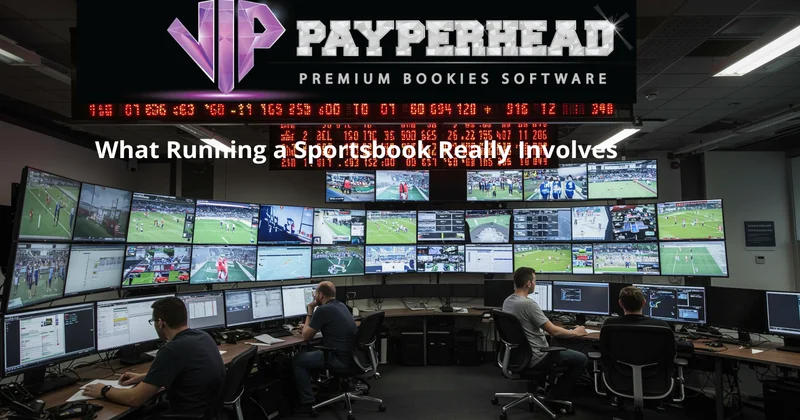
Understanding running a sportsbook is essential for any operator who wants to build a structured and profitable sportsbook business. Many people assume that sportsbook operations are limited to accepting bets and tracking results. However, that assumption creates operational gaps from the beginning. In reality, running a sportsbook requires coordinated setups, controlled workflows, and a scalable infrastructure that supports continuous activity.
When analyzing running a sportsbook, it becomes clear that the business operates as a system rather than a single function. Every action inside the sportsbook affects multiple components at the same time. Because of this, operators must rely on structured platforms instead of manual processes. This is why understanding the operational foundation is directly connected to the pillar How to Start and Run a Profitable Sportsbook, where the full lifecycle of sportsbook development is defined.
Therefore, before launching or scaling a sportsbook, operators must understand the core elements that define performance, administration, and long-term growth.
Why Most Operators Misunderstand What Running a Sportsbook Really Involves
One of the main challenges in understanding running a sportsbook is that most operators focus only on the visible side of the business. They see betting interfaces and assume the system is simple. However, the front-end experience represents only a small part of the operation.
In practice, sportsbook operations depend on backend systems that manage data, balances, and activity across the entire network. Because of this, operators who ignore backend complexity often lose control as activity increases.
For example, manual tracking may work with a small number of players. However, as the sportsbook grows, tracking balances, monitoring activity, and managing accounts becomes increasingly complex. As a result, errors begin to appear. Therefore, operators must implement structured setups from the beginning.
In addition, misunderstanding running a sportsbook leads to poor scalability. Without a system designed for growth, performance declines as volume increases. Because of this, infrastructure must be prioritized from day one.
The Core Components Behind What Running a Sportsbook Really Involves
To properly define running a sportsbook, it is necessary to organize the business into core operational components. These components form the foundation of the sportsbook.
Player Management Systems
Player management is one of the most visible components. However, it goes far beyond account creation. It includes:
- Balance tracking
- Activity monitoring
- Account status management
Because player activity drives the entire system, this component must be fully integrated with financial and reporting layers.
Agent-Based Structure
Another key element in running a sportsbook is the agent network. Many sportsbooks operate through a hierarchical model where:
- Players belong to agents
- Agents belong to master agents
This structure allows expansion. However, it also introduces complexity. Therefore, operators must maintain centralized command across all levels.
If the agent structure is not properly managed, activity becomes fragmented. As a result, visibility is lost. Because of this, structured administration setups are required.
Financial Control Systems
Financial tracking is a central part of running a sportsbook. Every transaction must be recorded and updated in real time.
This includes:
- Player balances
- Agent balances
- Network-level exposure
Because financial data changes continuously, accuracy is critical. Without real-time updates, discrepancies appear. Therefore, automation is essential.
Reporting and Visibility
Another fundamental component is reporting. Operators must have access to instant data that reflects the current state of the sportsbook.
Reporting setups provide:
- Activity summaries
- Performance metrics
- Network-wide visibility
Because decisions depend on data, reporting becomes a core operational tool. Without it, operators cannot maintain control.
Key Operational Areas You Must Master
To fully understand running a sportsbook, operators must master several operational areas. These areas define long-term success.
Sportsbook Management Systems
Operators must understand how management systems the entire operation. These networks centralize all activity and provide instant visibility.
For deeper insight, this connects directly with topics such as sportsbook management setups and backend control environments.
Workflow Execution
Another critical area is workflow execution. Every action inside the sportsbook triggers multiple system updates. Because of this, workflows must be synchronized.
This area will be explored further in cluster topics related to sportsbook workflow automation and system coordination.
Network Management
Managing the agent network is essential. Operators must monitor activity across all levels. Therefore, control mechanisms must be built into the system.
This connects with cluster-level discussions on agent-based sportsbook structure and hierarchical control models.
Common Mistakes When Understanding What Running a Sportsbook Really Involves
Many operators fail because they misunderstand key aspects of the business.
Focusing Only on the Front End
Operators often prioritize the user interface while ignoring backend networks. However, the backend defines stability. Therefore, this approach creates risk.
Ignoring System Scalability
Another common mistake is building a system that cannot scale. As activity increases, performance declines. Because of this, operators must plan for growth from the beginning.
Lack of Centralized Command
Without centralized networks, data becomes fragmented. As a result, operators lose visibility. Therefore, control must be maintained through structured platforms.
How This Connects to Building a Profitable Sportsbook
Understanding running a sportsbook is not an isolated concept. Instead, it directly supports the broader process of building a profitable sportsbook.
Every component discussed in this section feeds into the full operational model. Therefore, this hub acts as a foundation for deeper topics such as:
- sportsbook financial systems
- sportsbook reporting tools
- sportsbook workflow automation
These cluster topics expand each operational area in detail.
What Operating a Sportsbook Truly Involves
To move deeper into running a sportsbook, it is necessary to understand how sportsbook networks operate in real time. A sportsbook does not function through isolated components. Instead, it runs through synchronized workflows that process activity instantly across all operational layers.
Because of this, execution becomes the core driver of stability. Every action inside the sportsbook triggers multiple system updates. Therefore, operators must rely on platforms that coordinate these processes without delay. In practice, this is where Pay Per Head infrastructure becomes essential, since it connects all workflows under one unified system.
Real-Time Workflow Execution
At the center of running a sportsbook is instant execution. Every sportsbook action must be processed instantly to maintain system accuracy.
For example, when a player places a bet, the system must:
- Validate the account
- Update the balance
- Record the transaction
- Adjust exposure
- Reflect the change in reporting dashboards
All of these processes occur at the same time. Because of this, even small delays can create inconsistencies. Therefore, execution speed is not optional. It is a core requirement.
In addition, sportsbook activity is continuous. Events occur across multiple sports and time zones. As a result, the system must remain stable without interruption. This continuous operation defines the complexity behind execution.
Synchronization Across Systems
Another critical element of running a sportsbook is synchronization. Each operational layer must communicate with the others in real time.
For example, the player management system must sync with:
- Financial tracking networks
- Agent network structures
- Reporting dashboards
Because of this, data consistency is essential. If one system updates faster than another, discrepancies appear. As a result, operators lose visibility over their operation.
In practice, Pay Per Head platforms solve this problem by centralizing all data flows. Instead of managing separate tools, operators use one system that updates all components simultaneously. Therefore, synchronization becomes automatic.
Agent-Based Workflow Coordination
In many sportsbook models, agent networks play a central role. Therefore, understanding their execution is key to running a sportsbook.
Agent-based workflows include:
- Assigning players to agents
- Managing agent hierarchies
- Tracking balances across levels
Because each agent operates within a larger structure, coordination is required. Without centralized management, activity becomes fragmented. Therefore, operators must rely on structures that unify agent activity.
In addition, hierarchical structures require rules. Master agents oversee sub-agents, while sub-agents manage players. Because of this, the system must enforce permissions and control mechanisms.
This topic connects directly with cluster-level discussions such as agent-based sportsbook structure and network hierarchy management.
Financial Flow Execution
Financial flow is another critical component in running a sportsbook. Every transaction must be processed accurately and reflected across the system in real time.
This includes:
- Player balance updates
- Agent-level financial tracking
- Network-wide exposure monitoring
Because financial data changes constantly, accuracy is essential. Even minor errors can affect the entire operation. Therefore, automation is required to maintain consistency.
In addition, operators must have immediate access to financial data. Real-time dashboards allow them to monitor activity and maintain control. Without this visibility, financial management becomes reactive instead of proactive.
This area is further expanded in topics such as sportsbook financial control systems and current balance management.
Permission-Based Control Systems
Another key part of running a sportsbook is system-level administration. Operators must define who can access different parts of the sportsbook.
Permission-based structures assign roles such as:
- Operator (full management)
- Master agent (network oversight)
- Agent (player management)
Because each role has specific responsibilities, access must be restricted. Without permission, unauthorized actions can occur. Therefore, security and operational control are closely linked.
In addition, permission structures improve efficiency. Users interact only with relevant data. As a result, workflows remain organized and scalable.
Reporting as a Real-Time Decision Tool
Reporting systems play a central role in running a sportsbook. They transform raw data into actionable insights.
Operators rely on reporting to:
- Monitor activity levels
- Track performance metrics
- Identify operational patterns
Because sportsbook data changes constantly, reports must update in real time. Static reports are not sufficient. Instead, operators need dynamic dashboards.
In practice, reporting becomes a decision engine. It allows operators to respond quickly to changes in activity. Therefore, reporting is not just a support function. It is a core operational tool.
This connects directly with cluster topics such as sportsbook reporting tools and performance monitoring systems.
Workflow Automation
Efficiency is another defining factor in running a sportsbook. Manual processes slow down operations and increase the risk of errors. Therefore, automation becomes essential.
Automation applies to:
- Account management processes
- Financial updates
- Reporting generation
Because automated structures handle repetitive tasks, operators can focus on strategic decisions. In addition, automation ensures consistency across workflows.
For example, instead of manually updating balances, the system processes transactions automatically. As a result, speed and accuracy improve.
This topic connects with deeper cluster discussions on sportsbook workflow automation and system efficiency optimization.
Integration Across the Sportsbook Ecosystem
To fully understand running a sportsbook, operators must consider system integration. A sportsbook connects multiple components that must work together seamlessly.
These include:
- Odds and market feeds
- Player interfaces
- Backend management systems
Because these components interact constantly, integration must be stable. Any disruption affects the entire operation. Therefore, reliability is critical.
In addition, integration supports scalability. As the sportsbook grows, new components can be added without disrupting existing workflows. This flexibility is essential for long-term success.
Execution Challenges in Growing Sportsbooks
As sportsbooks grow, execution becomes more complex. This is a critical aspect of running a sportsbook.
Common challenges include:
- Increased transaction volume
- More complex agent networks
- Higher data processing requirements
Because of these factors, structures must scale without losing performance. If execution slows down, operational declines.
Therefore, operators must rely on infrastructure designed for high-volume environments. Pay Per Head platforms provide this capability by maintaining stability under increasing demand.
Connecting Execution with the Full Sportsbook Model
At this point, it is clear that execution defines the operational performance of a sportsbook. While structure provides the foundation, execution determines how effectively the system operates.
Understanding running a sportsbook requires combining both elements. Structure without execution is incomplete. Execution without structure leads to instability.
Therefore, operators must align systems, workflows, and infrastructure into one unified model. This alignment ensures that every part of the sportsbook operates efficiently.
Fundamentals of Running a Sportsbook
To complete the framework of running a sportsbook, operators must move beyond structure and execution into optimization and scalability.
At this stage, the objective is not simply to run the sportsbook. Instead, the goal is to refine performance, eliminate inefficiencies, and scale without losing control. Because of this, optimization becomes the defining factor between short-term activity and sustained profitability.
Optimization as a Continuous Process
One of the most important aspects of running a sportsbook is understanding that optimization is not a one-time action. It is a continuous process that improves system performance over time.
Operators must constantly evaluate:
- Workflow efficiency
- System response times
- Data accuracy across all layers
Because sportsbook operations run continuously, even small inefficiencies compound quickly. Therefore, ongoing optimization is essential.
In practice, this means identifying friction points in the system and refining them. For example, delays in reporting or inconsistencies in balance updates must be corrected immediately. As a result, the entire operation becomes more stable.
Scaling a Sportsbook Without Losing Management
Scaling is one of the most complex aspects of running a sportsbook. Many operators focus on growth but fail to maintain control as their network expands.
Scaling involves:
- Increasing player volume
- Expanding agent networks
- Processing more transactions in real time
Because each of these factors increases complexity, the system must handle growth without disruption. If the infrastructure cannot support expansion, performance declines.
For this reason, scalability must be built into the system from the beginning. Operators cannot rely on reactive solutions. Instead, they must use platforms designed for growth.
Pay Per Head infrastructure allows operators to expand their network while maintaining centralized control. Therefore, scaling becomes structured rather than chaotic.
Automation at Scale
Automation plays a central role in running a sportsbook at the optimization level. While automation is used in execution, scaling requires deeper integration.
Automation allows operators to:
- Standardize processes across the network
- Eliminate repetitive manual tasks
- Maintain consistency under high volume
Because manual intervention becomes impossible at scale, automation ensures that workflows remain efficient. As a result, performance improves without increasing workload.
In addition, automation reduces the risk of human error. This is especially important when managing large networks with continuous activity.
This connects directly with cluster-level topics such as sportsbook workflow automation and system optimization strategies.
System Stability and Risk Awareness
Another key factor in running a sportsbook is maintaining system stability. While this does not involve betting strategies, it requires awareness of operational balance.
Operators must monitor:
- Activity distribution across the network
- System performance under load
- Data consistency across all layers
Because sportsbook operations are dynamic, small issues can escalate quickly. Therefore, early detection is critical.
System stability depends on:
- Real-time synchronization
- Accurate reporting
- Consistent workflow execution
If these elements function correctly, the sportsbook remains stable even as activity increases.
Integration as a Growth Enabler
Integration is another critical component of running a sportsbook. As sportsbooks grow, they must connect multiple structures without disrupting operations.
These integrations include:
- Odds and market feeds
- Player interfaces
- Backend systems
Because these components interact constantly, integration must be seamless. Any failure affects the entire system. Therefore, reliability is essential.
In addition, integration supports expansion. Operators can add new features or services without rebuilding the system. This flexibility allows the sportsbook to evolve over time.
Pay Per Head platforms simplify integration by providing unified environments. As a result, operators avoid the complexity of managing multiple disconnected tools.
Long-Term Operational Consistency
Consistency is another defining factor in running a sportsbook. While short-term performance may fluctuate, long-term success depends on stable operations.
Consistency includes:
- Reliable system performance
- Predictable workflow execution
- Continuous data accuracy
Because sportsbook activity never stops, consistency must be maintained at all times. Any disruption can affect multiple layers simultaneously.
For this reason, operators must rely on centralized structures that enforce uniform processes. Fragmented systems create inconsistencies and reduce control.
Infrastructure as the Core of Profitability
At the highest level, running a sportsbook is defined by infrastructure. Every component of the sportsbook depends on the system that supports it.
Infrastructure determines:
- How workflows are executed
- How data is processed
- How the network scales
Without a strong infrastructure, optimization is not possible. Therefore, operators must prioritize platform selection from the beginning.
Pay Per Head platforms provide this foundation by integrating all operational components into one system. As a result, operators gain full visibility and administration.
In addition, infrastructure reduces operational complexity. Instead of managing multiple tools, operators rely on a single platform. This improves efficiency and stability.
Connecting the Full Sportsbook Model
At this stage, it is clear that running a sportsbook is the integration of structure, execution, and optimization. Each element plays a critical role in the overall system.
- Structure defines the operational framework
- Execution runs the system in real time
- Optimization improves long-term performance
Because these elements are interconnected, operators must manage them as a unified model. Ignoring one area affects the entire operation.
In practice, successful sportsbooks operate through centralized systems that connect all components. This approach ensures stability, scalability, and efficiency.
From Operation to Business
Understanding running a sportsbook transforms how operators approach the business. Instead of focusing on isolated actions, they begin to see the sportsbook as a system.
At a surface level, sportsbook operations may seem simple. However, at a deeper level, they require coordination, control, and continuous improvement. Because of this, operators must adopt a system-oriented mindset.
In addition, long-term success depends on adaptability. As the sportsbook grows, new challenges emerge. Therefore, the system must evolve without losing stability.
Build with the Right Infrastructure
If you now understand running a sportsbook, the next step is applying this knowledge with the right infrastructure.
VIP Pay Per Head provides:
- Centralized sportsbook management
- Real-time operational control
- Scalable agent-based structures
- Automated workflows across all layers
Because the platform is built for sportsbook operators, it allows you to launch, manage, and scale your business efficiently.
Request a demo today and experience how VIP Pay Per Head can support every stage of your sportsbook operation.