
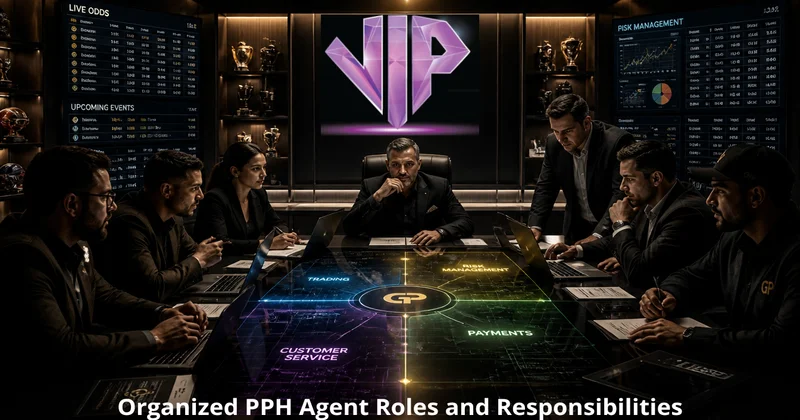
For sportsbook operators managing multiple agents, growth can create an unexpected administrative problem: responsibilities become harder to separate. PPH agent roles help establish clear ownership across the operation, so operators know who supervises relationships, handles assigned responsibilities, and remains accountable when an issue requires attention.
Within a Pay Per Head environment, centralized management gives bookies and master agents greater visibility across player accounts, agent relationships, reporting, and administrative activity. However, technology alone does not create an organized network. Operators still need clear responsibility boundaries between ownership, master agents, agents, and sub-agents.
This becomes increasingly important as the network expands. Without defined roles, two people may handle the same task while another responsibility receives no attention at all. Clear ownership reduces that ambiguity and makes centralized management more effective.
Therefore, organizing agent roles is not simply about establishing titles or reporting levels. It is about determining who is responsible for what and creating accountability around those responsibilities.
Why Clearly Defined PPH Agent Roles Improve Operational Control
An agent network becomes difficult to manage when responsibilities depend on assumptions rather than defined ownership. An operator may understand the overall structure while individual agents have different interpretations of who should supervise accounts, communicate operational issues, or escalate exceptions.
Clearly defined PPH agent roles reduce this uncertainty. Each role has an understood operational scope, which allows responsibilities to move through the network without unnecessary duplication. As a result, owners and master agents can identify where accountability exists instead of repeatedly determining who should handle each situation.
This clarity becomes particularly valuable within a centralized Pay Per Head operation. Account information, reporting, agent activity, and administrative data can be viewed through a common operational environment. When those records correspond with clearly assigned responsibilities, management gains both visibility and accountability.
Role clarity also improves communication. Agents know which matters fall within their responsibility and which require escalation. Master agents can focus on their assigned oversight instead of absorbing tasks that should remain at another level.
However, role organization should not be confused with the broader agent hierarchy. Hierarchy establishes reporting relationships and structural levels. Role organization determines the responsibilities attached to those positions. Operators evaluating how those levels interact can examine the broader agent hierarchy separately.
For day-to-day management, this distinction matters. A well-designed structure can still produce operational friction when nobody clearly owns specific responsibilities. Defined roles turn organizational structure into practical management control.
How Responsibilities Should Be Divided Across PPH Agent Roles
Responsibility allocation should follow operational scope rather than titles alone. Each level should own the functions it can reasonably supervise while remaining accountable to the appropriate level above it.
At the sportsbook operator or ownership level, responsibilities generally remain broad. Ownership establishes operating standards, maintains overall visibility, and determines how the agent network should be governed. The objective is not to manage every routine agent activity directly. Instead, ownership maintains control over the wider operation.
A master agent normally carries a different scope. This role can provide oversight across assigned agents, coordinate responsibilities within that segment of the network, and maintain accountability between ownership and the agents under its supervision. The master-agent role therefore helps distribute management without removing centralized operational visibility.
Individual agents and sub-agents operate within narrower responsibility boundaries. Their focus remains on the relationships, accounts, and administrative duties assigned to their operational scope. Those boundaries prevent responsibilities from spreading informally across unrelated parts of the network.
A Pay Per Head environment makes this separation easier to maintain because agents can operate within a shared management framework while ownership retains centralized visibility. The operator does not need every role to perform the same functions to maintain control.
The key principle is therefore not creating more management layers. It is aligning each role with a defined area of responsibility. Structural differences between master agents and sub-agents deserve separate analysis; here, their importance is limited to establishing clear operational ownership.
When responsibilities are divided this way, agent networks can distribute administrative workload without distributing accountability blindly. Operators retain oversight, master agents supervise their assigned scope, and individual agents understand where their responsibilities begin and end.
Why Responsibility Boundaries Matter in Pay Per Head Agent Management
Clearly defined responsibilities are only useful when each PPH agent role has boundaries. Without them, agents may understand their general duties but still encounter situations where ownership overlaps. That creates duplicated work, inconsistent decisions, and uncertainty about who should resolve an operational issue.
For example, a master agent and an individual agent may both assume responsibility for the same administrative matter. In another situation, each may expect the other to handle it. The first scenario creates unnecessary duplication. The second creates an operational gap.
Responsibility boundaries reduce both problems. They establish where one role’s ownership ends and another begins. They also help operators distinguish routine responsibilities from matters that require escalation.
A centralized Pay Per Head environment strengthens this model because operational activity can remain visible even when responsibilities are distributed among several agents. Account records, reporting, and administrative information provide management with a common operational reference. Consequently, responsibility does not need to become disconnected from oversight.
This distinction becomes especially important for sportsbook owners managing several independent relationships. Delegating responsibilities should reduce administrative pressure without sacrificing accountability.
However, responsibility ambiguity should not be confused with broader agent network structural problems. Network design can create its own operational challenges. In this context, the narrower concern is whether each role has identifiable ownership of the responsibilities assigned to it.
Clear boundaries ultimately create a simple management principle: every important responsibility should have an identifiable owner, while operators retain sufficient visibility to supervise the overall network.
Matching Role Authority With Operational Responsibility
Assigning responsibility without considering authority can create another form of operational friction. If an agent is expected to manage an activity but lacks the appropriate operational authority, routine matters may repeatedly move upward through the network. That creates bottlenecks and weakens the value of delegated management.
The opposite creates a different concern. Giving a role substantially more authority than its responsibilities require can weaken operational control. Therefore, effective PPH agent roles should maintain a reasonable relationship between responsibility, authority, and accountability.
Within a Pay Per Head operation, this relationship can be supported through centralized administrative controls and reporting visibility. Different roles can operate within defined boundaries while sportsbook ownership maintains broader oversight. This allows responsibility to be distributed without requiring unrestricted operational control at every level.
Reporting visibility also matters. A role that carries responsibility for a specific area should have enough relevant information to understand that area and remain accountable for its performance. Meanwhile, issues outside that scope should follow an appropriate escalation path.
The objective is not to give every agent equal access or decision-making authority. Instead, operational authority should reflect the responsibilities attached to each role.
Detailed permission configuration is a separate technical subject. At the management level, the principle is simpler: authority should support responsibility without unnecessarily expanding operational exposure.
That balance helps a Pay Per Head network preserve both delegation and centralized control.
Keeping PPH Agent Responsibilities Clear as Networks Become More Complex
Role clarity becomes more important as an agent network develops additional relationships and management layers. Responsibilities that were obvious in a small operation can become less predictable when more agents participate in daily sportsbook administration.
One common challenge is responsibility drift. An agent gradually begins handling duties outside the original role because doing so appears convenient. Over time, informal arrangements can become normal practice, even when they no longer reflect the intended management structure.
Pay Per Head operations can limit this problem by maintaining consistent role definitions within a centralized management environment. Operators can preserve common expectations while still distributing responsibilities across master agents, agents, and sub-agents.
Consistency does not mean every agent must perform identical duties. Instead, comparable roles should follow recognizable responsibility boundaries. This makes accountability easier to understand and prevents the network from becoming dependent on informal arrangements between individuals.
Centralized visibility becomes increasingly valuable as organizational complexity increases. Sportsbook ownership can oversee the broader operation while responsibilities remain distributed through defined agent roles. Master agents can supervise their assigned scope without automatically absorbing ownership-level functions, while agents remain focused on responsibilities appropriate to their position.
This is different from designing a multi-level agent network for scale. Scaling strategy determines how additional organizational layers support expansion. Role organization addresses a narrower question: how responsibility clarity can be preserved once complexity increases.
Therefore, sustainable agent management depends less on adding titles and more on maintaining disciplined responsibility ownership. As networks evolve, clearly defined PPH agent roles help preserve accountability, administrative consistency, and operational control without requiring sportsbook ownership to manage every activity directly.
Better Agent Networks Start With Clear Responsibility
Effective PPH agent roles depend on more than titles or reporting levels. Each role needs a defined operational purpose, appropriate authority, and clear accountability. When those elements remain aligned, sportsbook operators can distribute responsibilities without losing visibility over the wider business.
This role clarity supports the broader principles of Pay Per Head agent network management. Owners retain centralized oversight, master agents supervise defined areas, and agents operate within recognizable responsibility boundaries. As a result, administrative complexity becomes easier to control as the organization develops.
For operators evaluating their broader network model, Pay Per Head Agent Networks: The Complete Management Framework provides the parent framework for understanding how these roles connect with agent structures, oversight, account organization, and long-term network management.
VIP Pay Per Head supports agent-based sportsbook businesses with centralized operational infrastructure and practical management resources. For operators building or refining an agent network, the objective is straightforward: distribute responsibility while preserving accountability and operational control.
Frequently Asked Questions About PPH Agent Roles
What are PPH agent roles?
PPH agent roles define areas of operational responsibility within a Pay Per Head agent network. They help establish who manages specific relationships, administrative duties, oversight functions, and assigned account responsibilities while sportsbook ownership maintains centralized visibility across the operation.
Why should sportsbook agent responsibilities be clearly defined?
Clear responsibilities reduce duplicated work, management gaps, and uncertainty about operational ownership. They also improve accountability because sportsbook operators and master agents can identify which role is responsible for a particular activity without relying on informal assumptions.
What is the difference between an agent role and an agent hierarchy?
An agent role defines responsibilities, authority, and operational ownership. An agent hierarchy defines structural relationships and reporting levels within the network. The concepts work together, but they answer different management questions: hierarchy determines organizational position, while roles determine who is responsible for what.
Should master agents and sub-agents have different responsibilities?
Generally, yes. Responsibilities should correspond with each role’s operational scope and authority. Master agents typically require broader oversight responsibilities, while sub-agents operate within narrower assigned boundaries. The exact responsibilities can vary according to the sportsbook’s agent network model.
Why do responsibility boundaries matter in a PPH network?
Responsibility boundaries establish operational ownership and make accountability easier to maintain. They help prevent overlapping duties, unresolved administrative issues, inconsistent decisions, and uncertainty about who should handle or escalate a particular matter within the agent network.
Can PPH agent roles change as a sportsbook grows?
Yes. Responsibilities can evolve as an agent network becomes more complex. However, operators should preserve clear ownership when roles change. Maintaining recognizable responsibility boundaries helps additional agents or management layers support growth without weakening accountability, administrative consistency, or centralized operational visibility.