
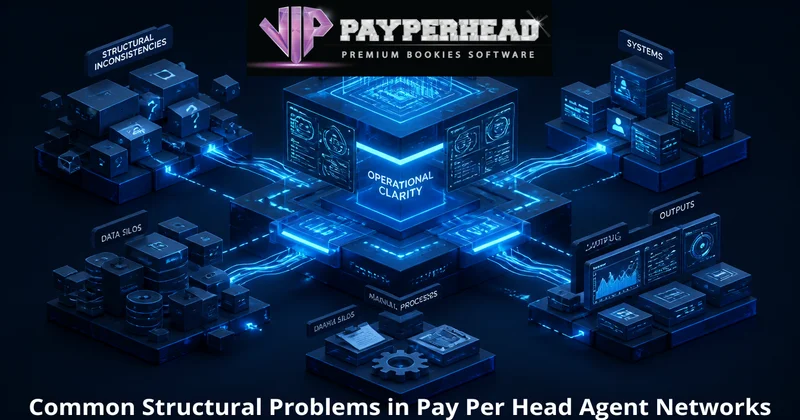
Sportsbook operators can build successful agent relationships and still encounter Pay Per Head agent network problems as those relationships become more complex. Adding agents, master agents, account groups, and management levels creates organizational dependencies that must remain clear across the entire operation. When those relationships lose consistency, the sportsbook may still function, but understanding how the network fits together becomes increasingly difficult.
A Pay Per Head operation provides a common environment where these distributed relationships can remain organized. Agents can maintain their established business relationships while sportsbook management retains a broader view of how accounts and management levels connect. Therefore, the structural challenge is not simply having many agents. It is preserving recognizable relationships as the network develops.
For bookies, master agents, and sportsbook operators, structural clarity directly affects administrative efficiency and operational control. This article examines the most common structural problems that weaken that clarity. It focuses specifically on organizational problems rather than financial settlements, risk exposure, player management, or technical configuration.
Why Structural Problems Develop in Pay Per Head Agent Networks
Structural problems often emerge gradually rather than from one major organizational failure. A sportsbook may begin with a relatively simple group of agents whose relationships are easy to understand. However, additional agents, account relationships, and management levels can introduce complexity faster than the underlying organization adapts.
Within a Pay Per Head environment, distributed relationships can operate inside one broader administrative framework. This creates an important advantage, but the framework still depends on consistent organizational relationships. If different parts of the network are organized according to conflicting assumptions, adding more activity can amplify existing structural weaknesses.
For example, growth may increase the number of relationships that management needs to recognize. More agents can mean more account associations and additional connections between operational levels. Consequently, a structure that was understandable at a smaller scale may become harder to interpret when those relationships multiply.
The problem is therefore not growth itself. It is structural inconsistency under increasing complexity.
A well-organized Pay Per Head agent network keeps those relationships identifiable as the business develops. This allows sportsbook operators to support distributed agent relationships without turning the operation into disconnected administrative groups. Detailed strategies for scaling agent networks belong to their dedicated operational cluster; here, scale matters only because increasing complexity can expose structural weaknesses that were previously difficult to see.
WHAT HAPPENS WHEN THOSE RELATIONSHIPS BECOME UNCLEAR
An agent network depends on recognizable relationships between the people and accounts operating within it. When those relationships become unclear, sportsbook management may know which agents are active without having the same clarity about how each relationship fits into the broader organization.
This creates organizational ambiguity.
For instance, an agent may exist within a larger management relationship, while other agents operate at different levels of the same network. If those connections are not consistently represented, the sportsbook can develop uncertainty about where particular relationships belong. As a result, administrative organization becomes harder even when individual agents continue operating normally.
Pay Per Head operations help reduce this problem by maintaining agent relationships within a shared operational environment. Instead of allowing each agent relationship to become an isolated administrative structure, the broader network can preserve identifiable connections between organizational levels.
However, this does not mean every agent should have the same responsibilities or authority. Master agents, agents, and sub-agents may occupy different positions within the network. The detailed distinctions between those roles belong to the dedicated structural clusters that own those topics.
For structural diagnosis, the important issue is simpler: management relationships should remain recognizable.
When sportsbook operators can identify how agent relationships connect, the network retains organizational coherence. When those relationships become ambiguous, complexity begins to replace clarity. Therefore, maintaining recognizable agent relationships is one of the foundations for keeping a growing Pay Per Head operation administratively organized.
When Account Relationships Become a Structural Warning Sign in Pay Per Head Networks
A Pay Per Head agent network becomes harder to understand when player accounts lack a clearly recognizable relationship with the appropriate agent. The issue is not the account itself. Instead, the structural problem occurs when management cannot easily determine where that account belongs within the broader agent organization.
This distinction becomes increasingly important as account volume grows. A small sportsbook may recognize account relationships informally. However, larger agent networks depend on consistent organizational associations. When those associations become unclear, accounts can lose the context that connects them to the appropriate part of the network.
A structured Pay Per Head environment helps preserve these relationships within one broader operational framework. Player accounts can remain associated with specific agents while management maintains an organized view of how those relationships fit into the sportsbook operation. Therefore, distributed account relationships do not have to become disconnected administrative groups.
However, account association should not be confused with balance management, credit, settlements, or player management. Those functions belong to separate operational disciplines. Likewise, the detailed mechanics of assigning or reassigning accounts belong to the dedicated player account assignment cluster.
For structural diagnosis, the central issue is whether each account retains an identifiable organizational context. When that context becomes inconsistent, the network loses clarity even if the underlying accounts remain operational.
Why Fragmented Visibility Makes Pay Per Head Agent Networks Harder to Manage
Structural organization depends on more than establishing relationships. Sportsbook operators also need enough visibility to understand how those relationships fit together across the agent network.
Fragmentation occurs when different parts of the operation become difficult to interpret as one coherent structure. Individual agents may continue managing their established relationships, yet sportsbook management can lose a clear view of how those relationships connect across different organizational levels.
A Pay Per Head operation can reduce this fragmentation by keeping distributed agent relationships within a common administrative environment. This allows the sportsbook to preserve the distinction between individual agent relationships while maintaining broader organizational visibility.
The operational benefit is not centralized decision-making for every activity. Instead, it is the ability to understand the network without requiring each agent relationship to exist as an isolated administrative unit.
That distinction also protects adjacent content domains. Structural visibility is not the same as financial reporting, performance analytics, permissions, or risk monitoring. Those functions may use operational data, but they answer different business questions.
Within agent network management, visibility has a narrower purpose: helping operators understand who belongs where and how the relationships connect. When that structural picture remains coherent, administrative complexity is easier to control. When it becomes fragmented, even an active agent network can become increasingly difficult to interpret.
How Pay Per Head Operations Help Preserve Structural Consistency
The operational advantage of Pay Per Head becomes especially important when a sportsbook needs to maintain many distributed relationships without creating separate administrative environments for every agent.
A common operational framework gives the network a consistent organizational context. Agents, management levels, and associated player accounts can remain distinguishable while still belonging to the same broader sportsbook structure. Consequently, the operator gains organization without eliminating the distributed relationships that define the agent model.
Consistency also helps prevent complexity from becoming fragmentation. As additional relationships develop, management can preserve recognizable connections instead of relying entirely on informal knowledge about which accounts or agents belong together.
This does not eliminate every structural challenge. A Pay Per Head environment still requires clearly defined relationships and consistent organization. However, it provides the operational foundation needed to keep those relationships visible and administratively coherent.
For bookies and master agents, that foundation becomes increasingly valuable as the network develops. The objective is not to centralize every responsibility. It is to maintain enough structural consistency that individual relationships remain understandable within the larger operation.
Therefore, Pay Per Head agent network problems are easier to identify when the business operates within an organized framework. Clear relationships, consistent account associations, and coherent network visibility help sportsbook management recognize structural weaknesses before organizational complexity begins to undermine operational clarity.
Managing Pay Per Head Agent Network Problems Before Complexity Grows
The most important Pay Per Head agent network problems are not always caused by the number of agents or accounts in a sportsbook. They often develop when organizational relationships become unclear, account associations lose consistency, or management can no longer understand how different parts of the network connect.
A structured Pay Per Head environment helps operators preserve that organizational context. Clear agent relationships, identifiable account associations, and coherent network visibility allow distributed operations to remain manageable as complexity increases.
These principles form one part of the broader Pay Per Head agent network management framework. Hierarchy design, agent roles, account assignment, financial responsibilities, and scaling each require separate operational analysis.
VIP Pay Per Head supports bookies, agents, master agents, and sportsbook operators with an organized operational environment designed to maintain clarity as agent relationships develop. The objective is not simply to accommodate more accounts or agents, but to help preserve a manageable business structure over time.
Frequently Asked Questions
What are the most common Pay Per Head agent network problems?
Common problems include unclear agent relationships, inconsistent account associations, fragmented organizational visibility, and structural ambiguity between different parts of the network. These issues can make a sportsbook harder to administer even when individual agents and accounts continue operating normally.
Why do sportsbook agent networks become structurally complicated?
Agent networks often become more complicated as additional agents, accounts, and management relationships are introduced. Complexity becomes a structural problem when those relationships are no longer represented consistently, making it harder for sportsbook operators to understand how different parts of the network connect.
How can unclear agent relationships affect a Pay Per Head operation?
Unclear relationships can create uncertainty about where agents belong within the broader organizational structure. A Pay Per Head operation benefits from keeping those relationships identifiable within a common environment, helping management preserve organizational clarity across multiple agent levels.
What are the warning signs of structural inconsistency in an agent network?
Account organization gives player accounts an identifiable context within the agent network. When account-to-agent relationships remain clear, sportsbook management can understand where accounts belong without treating every account as an isolated administrative relationship.
Can a growing agent network lose organizational visibility?
Yes. Growth can increase the number of relationships management must understand. If organizational consistency does not keep pace with that complexity, visibility can become fragmented. A structured Pay Per Head environment helps preserve a coherent view of distributed agent relationships as the operation develops.
How does Pay Per Head help keep agent networks organized?
Pay Per Head provides a common operational environment where agents, management levels, and associated accounts can remain organized within the broader sportsbook structure. This supports administrative consistency and visibility without requiring every agent relationship to operate as a disconnected business unit.