
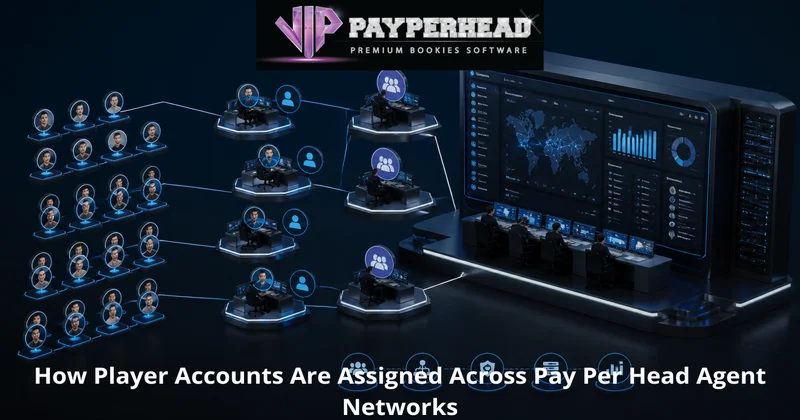
Sportsbook operators working with multiple agents need more than a collection of active accounts. They need to know where each account belongs within the business structure. Player account assignment in Pay Per Head establishes that organizational relationship by associating each player account with the appropriate agent position inside the broader network.
This association becomes increasingly important when a bookie operates through agents, master agents, or several organizational levels. Without a clear account-to-agent relationship, administrative responsibility becomes harder to identify and the operator can lose clarity over how accounts are organized across the business.
A Pay Per Head operation provides a structured environment for maintaining these relationships without forcing every agent to administer an isolated group of accounts outside the broader operation. Individual accounts can remain associated with their responsible agents while management retains an organized view of the network.
This article focuses specifically on that relationship. It explains how account assignment supports organizational clarity, how assignments relate to agent levels, and why consistent account association matters to Pay Per Head network management.
How Player Account Assignment Works in Pay Per Head Agent Networks
Player account assignment identifies the organizational relationship between a player account and the agent responsible for that relationship within the sportsbook’s Pay Per Head network. Instead of treating every account as an independent record, the operation places it within an identifiable agent structure.
At its simplest, a player account can be associated with an agent, while that agent may operate within a broader management relationship. This gives the account an organizational position inside the sportsbook business without requiring the operator to manage every account as though it belonged directly to the same operational level.
The distinction is important because account assignment is not the same as player management. Assignment identifies where an account belongs organizationally. It does not define player behavior, retention strategy, profiling, betting activity, or other disciplines associated with managing individual customers.
Likewise, assignment should not be confused with financial ownership. Account balances, credit arrangements, collections, and settlements belong to separate financial disciplines. The purpose of assignment in this context is narrower: establishing an identifiable relationship between an account and its appropriate agent position.
Within a Pay Per Head operation, this creates a structured account environment where organizational relationships remain visible without turning account administration into disconnected agent records.
Why Agent-Level Account Association Matters in Pay Per Head
Account association matters because an agent-based sportsbook depends on identifiable business relationships. When player accounts are consistently associated with their appropriate agents, operators gain a clearer understanding of how accounts are distributed across the network.
That clarity supports administrative organization. Instead of viewing the sportsbook as one undifferentiated collection of accounts, management can understand those accounts within their established agent relationships. Agents also operate with a clearer distinction between the accounts associated with their business relationships and those belonging elsewhere in the network.
This becomes particularly valuable as the number of account relationships increases. Administrative complexity does not come only from having more accounts. It also comes from maintaining the organizational context surrounding those accounts.
The Pay Per Head model helps preserve that context inside a common operational environment. Account relationships can remain organized without requiring each agent to maintain an entirely separate administrative structure. Therefore, the sportsbook can support distributed agent relationships while retaining coherent account organization.
The business value is organizational clarity rather than financial control. Proper account association helps operators understand where accounts belong, who is connected to those relationships, and how those accounts fit into the broader agent network.
How Agent Relationships Determine Player Account Placement
Player accounts do not exist separately from the organizational structure that supports them. In an agent-based Pay Per Head business, an account is typically associated with a specific agent relationship, while that relationship can exist within broader levels of the network.
Conceptually, the relationship may look like this:
Player Account → Agent → Higher Agent Level → Sportsbook Operation
The purpose of this relationship is not to redefine the responsibilities of agents or master agents. Those roles require their own analysis. Instead, the hierarchy provides the organizational context needed to understand where a player account belongs.
This distinction protects the sportsbook from treating account organization and hierarchy design as the same discipline. The hierarchy establishes relationships between management levels. Player account assignment establishes where an account sits within those relationships.
A Pay Per Head environment makes this association more manageable because accounts can remain organized within a common operational structure even when the sportsbook uses multiple agent levels. Consequently, the operator does not need to sacrifice overall account visibility simply because player relationships are distributed across agents.
For a deeper examination of management levels themselves, the separate Pay Per Head Agent Hierarchies Explained cluster owns that topic. Here, hierarchy matters only because it gives each assigned player account an identifiable organizational position.
How Pay Per Head Preserves Visibility Across Assigned Player Accounts
Assigning player accounts to different agents does not require sportsbook operators to lose visibility over how those accounts are organized. Within a Pay Per Head operation, account relationships can remain distributed across agents while the underlying administrative environment provides a coherent view of the network.
This distinction is important. Account assignment determines organizational association, while centralized visibility helps preserve that association across the operation. An account can remain connected to a specific agent relationship without becoming administratively isolated from the broader sportsbook business.
For bookies and sportsbook operators, this creates a practical separation between account responsibility and network visibility. Agents can maintain their established player relationships, while management can understand where those accounts sit within the broader operational structure.
The Pay Per Head environment supports this model by keeping account organization within a common administrative framework. Therefore, distributed account relationships do not need to create disconnected records or fragmented account structures.
However, centralized visibility should not be confused with reporting architecture, user permissions, or centralized decision-making authority. Those are separate operational disciplines. For player account assignment, its purpose is narrower: helping the sportsbook preserve a recognizable account-to-agent relationship throughout the network.
Why Consistent Player Account Assignment Improves Network Accountability
Consistency becomes important when a sportsbook has many player accounts associated with different agents. If account relationships are unclear or organized inconsistently, management may have difficulty identifying the operational context of individual accounts.
A consistent assignment structure gives each account an identifiable organizational relationship. As a result, the sportsbook can distinguish which agent relationship provides the account’s immediate business context without redefining the broader responsibilities of that agent.
This improves accountability at an administrative level. When an account has a recognizable position within the Pay Per Head network, there is less ambiguity about where that relationship belongs. Agents also benefit because the boundaries between their associated accounts and other parts of the network remain clearer.
Importantly, accountability here does not mean evaluating agent performance or assigning financial liability. Those subjects belong to other operational domains. Instead, it means maintaining clear ownership of the account relationship itself.
For sportsbook operators, that distinction becomes increasingly valuable as account volume and agent relationships develop. A structured Pay Per Head environment helps preserve these associations consistently, allowing the business to maintain organizational clarity without treating every player account as an independent administrative relationship managed directly by the operator.
Account Reassignment as Pay Per Head Agent Relationships Change
Player account relationships are not necessarily permanent. Over time, the organizational circumstances surrounding an account may change. An agent relationship may be reorganized, management responsibility may shift, or the sportsbook may need to associate an existing account with a different position in its agent network.
In these situations, account reassignment should be understood as a change in organizational association. The player account continues to exist, but its relationship within the Pay Per Head agent structure changes.
Maintaining that distinction helps protect operational continuity. The purpose is not to recreate the account or redefine unrelated aspects of player management. Instead, the sportsbook preserves the account while updating where that relationship belongs within the network.
A common Pay Per Head operational environment can make this organizational continuity easier to maintain because account relationships remain part of the broader administrative structure rather than isolated records controlled independently by individual agents.
The detailed process for transferring or reassigning accounts is intentionally outside this cluster’s scope. Implementation procedures could support separate operational content. Here, the important principle is that account assignment should remain adaptable enough to reflect legitimate changes in agent relationships without weakening the organizational clarity of the network.
Keeping Player Account Assignment Clear Across Agent Networks
Effective player account assignment in Pay Per Head gives every account a clear organizational position within the agent network. The objective is not to control every aspect of the player relationship from one level. Instead, assignment establishes which agent relationship provides the appropriate administrative context for each account.
For sportsbook operators, this creates practical business value. Accounts can remain associated with agents and broader management levels while the Pay Per Head environment preserves organized visibility across the operation. Clear assignment also supports accountability and allows those relationships to remain understandable as the network changes.
Player account assignment is therefore one specific component of the broader Pay Per Head agent network management framework. It complements agent hierarchy and network organization without replacing those disciplines or expanding into financial, risk, or player-management functions.
VIP Pay Per Head helps bookies, agents, master agents, and sportsbook operators maintain an organized operational environment where account relationships can remain structured as the business develops. The goal is straightforward: keep account-to-agent relationships identifiable without fragmenting the sportsbook operation.
Frequently Asked Questions
What is player account assignment in Pay Per Head?
Player account assignment in Pay Per Head is the organizational association between a player account and the appropriate agent relationship within the sportsbook network. It establishes where the account belongs administratively without defining broader player-management, financial, or risk functions.
Why are player accounts assigned to sportsbook agents?
Player accounts are associated with agents so the sportsbook can preserve clear organizational relationships across its network. Assignment helps operators identify where accounts belong while allowing agents to maintain their established account relationships within a common Pay Per Head operational environment.
Can player accounts be organized under master agents?
Yes. Player accounts associated with individual agents can exist within broader master-agent relationships when the sportsbook uses multiple organizational levels. However, account assignment identifies the account’s position within that structure; it does not define the complete responsibilities or authority of the master agent.
Does player account assignment determine account balances?
No. Player account assignment establishes an organizational relationship between an account and an agent. Balance management is a separate financial discipline. Credit, settlements, collections, reconciliation, and other financial responsibilities should not be confused with the organizational assignment of player accounts.
Can a player account be reassigned to another agent?
Yes, an account relationship may change when the organizational circumstances of an agent network change. Reassignment changes where the account belongs within the network while preserving the account itself. The specific procedures for making that change depend on the operational environment and fall outside this article’s scope.
Why does centralized visibility matter when accounts belong to different agents?
Centralized visibility helps sportsbook operators understand how accounts are organized across distributed agent relationships. Within a Pay Per Head environment, accounts can remain associated with different agents while management preserves a coherent view of their organizational position across the broader network.