
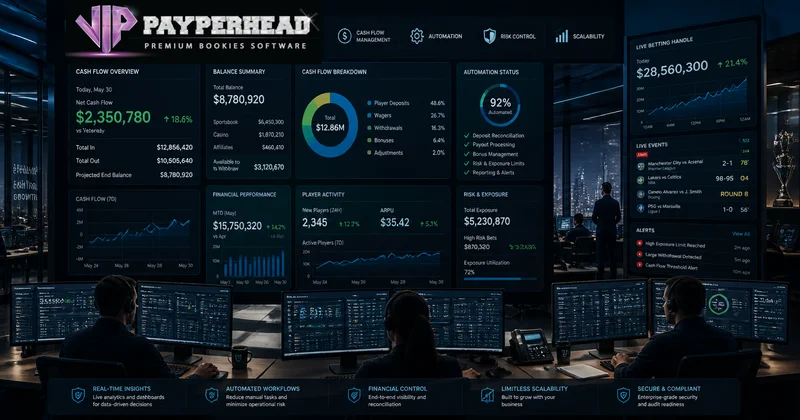
Sportsbook inflows outflows management is one of the most important operational responsibilities inside Pay Per Head sportsbook environments. Every sportsbook depends on continuous financial movement to maintain liquidity, organize settlements, support reporting systems, and stabilize daily operations. Daily transaction coordination is analyzed further in How Sportsbook Cash Flow Actually Moves Daily. Because of this, sportsbook operators must understand how money enters and exits the platform throughout the day. Without centralized visibility, sportsbooks lose financial oversight quickly while operational pressure increases across multiple financial layers.
From an operational standpoint, inflows include deposits, agent funding, balance transfers, and internal financial adjustments. Outflows include withdrawals, settlements, payout processing, and operational distributions. In operation, these financial movements create the operational rhythm of the sportsbook. Therefore, operators must monitor transaction timing, liquidity availability, and reporting consistency continuously.
Many operators focus only on balances while ignoring broader financial movement. However, balance visibility alone does not provide accurate operational control. A sportsbook may appear financially stable while still experiencing liquidity pressure because inflows arrive slower than outflows. Liability organization structures are discussed further in Player Deposits as Short-Term Liabilities. As a result, sportsbooks lose flexibility during periods of increased transaction activity and operational demand.
Why Liquidity Timing Matters
Liquidity timing affects sportsbook consistency significantly. Timing synchronization challenges are explored further in Understanding Timing Risk in Sportsbooks. Deposits, settlements, and withdrawals rarely move through the platform at identical speeds. Because of this, operators require infrastructure capable of organizing financial visibility automatically across every transaction layer.
Some sportsbooks maintain strong deposit activity while still facing operational instability. This situation usually appears when withdrawal requests and settlement obligations increase faster than incoming financial movement. Consequently, sportsbooks experience liquidity strain despite positive balance conditions across several operational accounts.
From an operational standpoint, timing also affects forecasting. Operators must estimate liquidity requirements across daily, weekly, and monthly sportsbook activity. Therefore, sportsbooks require reporting systems capable of identifying financial pressure before operational problems expand further.
Many operators react too slowly because reporting delays reduce visibility across the sportsbook environment. Spreadsheet systems create blind spots while transaction activity changes continuously. In addition, manual reconciliation processes slow operational response speed during high-volume periods. Because of this, sportsbooks require centralized reporting infrastructure that updates automatically. Operators using centralized sportsbook infrastructure can improve liquidity coordination, automate transaction visibility, and maintain stronger financial oversight across scalable Pay Per Head environments.
Common Mistakes in Sportsbook Financial Oversight
Many sportsbooks create unnecessary inefficiencies because they rely on fragmented financial systems. One common problem involves spreadsheet-based transaction monitoring. Manual systems require constant updates while deposits, withdrawals, and settlements move continuously across the platform. As a result, sportsbooks experience reporting inconsistencies and delayed financial visibility.
Another major issue appears when operators separate balance monitoring from transaction oversight. In operation, balances alone cannot explain liquidity conditions accurately. Operators must also understand how quickly money enters and leaves the sportsbook environment throughout the settlement cycle.
Some sportsbooks ignore agent-level financial exposure. Agent structures generate different settlement patterns, balance movement, and liquidity requirements. Therefore, sportsbook operators need centralized visibility capable of monitoring every operational layer connected to the network.
Operational Relevance Inside Pay Per Head Systems
Pay Per Head sportsbooks require organized financial infrastructure because operational complexity increases rapidly as sportsbooks scale. Smaller operations sometimes manage inflows and outflows manually during early growth stages. However, larger sportsbook environments require centralized systems capable of supporting continuous financial movement efficiently.
Automation improves sportsbook inflows outflows management significantly. Enterprise reporting automation continues evolving across scalable operational systems according to IBM Reporting systems organize transaction activity automatically while dashboards centralize visibility across deposits, settlements, balances, and withdrawals. Because of this, sportsbook operators reduce manual workload while improving financial accuracy and operational oversight.
The operational framework discussed throughout Sportsbook Cash Flow Fundamentals connects directly to broader financial strategies explained inside Sportsbook Cash Flow Management. In addition, sportsbooks often connect inflow and outflow visibility with real-time reporting systems and financial tracking infrastructure to improve long-term operational stability across expanding Pay Per Head operations.
Operational Breakdown of Sportsbook Inflows Outflows
Sportsbook inflows outflows structures operate as the financial circulation system inside Pay Per Head sportsbooks. Every deposit, settlement, transfer, and withdrawal affects liquidity movement throughout the sportsbook environment. Transaction sequencing structures are examined further in Mapping Financial Touchpoints Across the Bet Lifecycle. Because of this, operators need centralized systems capable of monitoring financial activity continuously across all operational layers.
Inflows usually begin through player deposits, agent funding, and balance transfers. Once funds enter the sportsbook ecosystem, the platform records the activity automatically. At the same time, reporting systems update balances and transaction visibility across operational dashboards. Therefore, sportsbook operators gain immediate access to real-time financial movement.
Outflows operate differently because they reduce available sportsbook liquidity. Withdrawals, settlements, and operational distributions all affect balance availability inside the platform. Consequently, sportsbooks must monitor outflow timing carefully to avoid operational instability.
Inside sportsbook operations, inflows and outflows function together continuously. As a result, operators need real-time infrastructure capable of tracking every movement across the financial environment while maintaining accurate reporting consistency.
Agent Networks and Financial Exposure
Agent structures create additional complexity inside sportsbook inflows outflows management. Different agents generate different financial patterns based on account activity, settlement timing, and operational exposure. Because of this, sportsbooks require agent-level visibility.
Some agents maintain healthy balance structures while others generate irregular liquidity movement. Therefore, operators must evaluate financial exposure across the entire sportsbook network continuously. According to liquidity forecasting principles discussed by PwC, operational visibility remains essential for scalable financial coordination.
From an operational standpoint, agent-related inflows and outflows affect settlement organizations directly. Larger sportsbook operations process significant financial movement daily across multiple agent layers. Without centralized oversight, sportsbooks struggle to maintain consistent financial visibility.
Many Pay Per Head systems organize this area through automated reporting infrastructure. Financial dashboards centralize transaction movement, agent balances, and settlement tracking into one operational environment. As a result, sportsbook operators improve oversight while reducing reporting delays significantly.
In addition, sportsbooks often connect agent-level reporting with operational forecasting systems. These integrations improve transaction visibility while helping operators estimate future liquidity requirements more accurately.
Why Manual Financial Systems Fail
Manual financial tracking creates operational problems quickly inside growing sportsbook environments. Spreadsheet systems require constant updates while transaction activity changes continuously. Consequently, sportsbooks experience delays, reconciliation issues, and balance inconsistencies.
In addition, manual processes reduce operational response speed. Operators cannot react efficiently when liquidity conditions change rapidly. Because of this, sportsbooks lose financial visibility during critical operational periods involving higher transaction volume.
Automation eliminates many of these inefficiencies. Deposits, settlements, transfers, and withdrawals update automatically across centralized reporting systems. Therefore, operators improve transaction visibility while reducing human error significantly.
Automated systems also improve financial forecasting. Operators can evaluate historical movement, monitor current liquidity conditions, and estimate future operational requirements more accurately.
Platform-Level Visibility and Control
Modern Pay Per Head systems centralize sportsbook inflows outflows management through integrated infrastructure. Financial dashboards organize transaction activity while reporting systems synchronize operational data continuously.
At the same time, sportsbooks connect inflow and outflow visibility with broader operational systems such as sportsbook financial reporting and real-time balance tracking. Because of this, operators gain stronger financial oversight across the sportsbook environment.
Inside Sportsbook Cash Flow Fundamentals, centralized reporting infrastructure supports operational organization and long-term scalability. In addition, the broader framework explained throughout Sportsbook Cash Flow Management helps sportsbooks reduce inefficiencies while improving financial consistency across expanding sportsbook operations.
Structuring Sportsbook Inflows Outflows for Scalability
Scalable sportsbook operations require centralized financial infrastructure capable of supporting increasing transaction volume, larger agent networks, and continuous liquidity movement. Because of this, sportsbook inflows outflows management must evolve alongside sportsbook growth.
Smaller sportsbooks sometimes operate with basic financial tracking systems during early operational stages. However, operational complexity increases quickly as sportsbooks expand. Therefore, operators need structured infrastructure capable of centralizing financial movement across every operational layer.
From an operational standpoint, scalability depends heavily on automation. Manual tracking systems cannot support large transaction environments efficiently. Consequently, sportsbooks require automated reporting, balance monitoring, and settlement synchronization tools.
Automation also improves operational visibility. Deposits, withdrawals, transfers, and settlements update automatically across centralized dashboards. As a result, sportsbook operators reduce delays while improving financial oversight and reporting consistency.
Improving Liquidity Stability
Liquidity stability depends on accurate visibility into both inflows and outflows. Operators must understand when money enters the sportsbook and when funds leave the system. Because of this, forecasting tools play a critical role inside scalable sportsbook environments.
Many sportsbooks experience operational pressure because liquidity timing remains inconsistent. Some operators maintain strong balances but fail to organize financial movement correctly. Therefore, sportsbooks must evaluate timing structures continuously.
Integrated financial reporting systems improve liquidity organization significantly. Dashboards centralize transaction activity while reporting infrastructure tracks movement automatically. Consequently, sportsbooks improve financial preparation during periods of increased operational activity.
At the same time, sportsbooks should connect liquidity monitoring with operational reporting systems and balance tracking infrastructure. These integrations improve financial consistency across the entire Pay Per Head operation.
Reducing Financial Inefficiencies
Operational inefficiencies usually appear when sportsbooks rely on fragmented financial systems. Separate reporting tools create visibility gaps, delayed updates, and reconciliation problems. Because of this, centralized infrastructure becomes essential for operational stability.
Standardized procedures also improve sportsbook inflows outflows management. Operators should organize consistent workflows across deposits, withdrawals, settlements, and reporting systems. Liquidity positioning and profitability distinctions are explored in Cash Flow vs Profit: Why They Are Not the Same. Therefore, sportsbooks improve operational coordination while reducing confusion.
Risk reduction depends heavily on transaction visibility as well. Operators must identify abnormal financial activity quickly before liquidity pressure expands. Automated systems improve response speed while strengthening operational oversight.
Many sportsbooks connect inflow and outflow optimization with operational areas such as sportsbook financial visibility, sportsbook reporting systems, and multi-agent financial structures. These systems support stronger liquidity organization while improving long-term scalability.
VIP Pay Per Head Infrastructure Advantages
The operational principles discussed throughout Sportsbook Cash Flow Fundamentals support stronger financial organization inside modern sportsbook environments. In addition, the broader framework explained throughout Sportsbook Cash Flow Management helps operators structure scalable Pay Per Head operations more efficiently.
VIP Pay Per Head provides centralized Pay Per Head infrastructure designed for automated reporting, liquidity coordination, financial visibility, and scalable sportsbook operations. Operators can monitor balances, organize agent structures, track liquidity movement, and improve transaction visibility through one unified platform.
From an operational standpoint, centralized infrastructure improves consistency across every financial layer connected to the sportsbook. Deposits, withdrawals, settlements, transfers, and balance updates remain synchronized through automated reporting systems. Because of this, operators reduce reporting delays while improving real-time visibility across the sportsbook environment.
VIP Pay Per Head also helps sportsbooks reduce operational inefficiencies connected to fragmented systems and manual financial tracking. Instead of relying on disconnected spreadsheets or delayed reconciliation procedures, operators gain access to organized dashboards capable of centralizing financial activity continuously.
In addition, scalable Pay Per Head infrastructure allows sportsbooks to support growing agent networks more efficiently. Operators can evaluate agent-level balances, settlement activity, liquidity exposure, and transaction movement without losing operational visibility. Consequently, sportsbooks maintain stronger financial oversight while expanding operational capacity.
Automation also strengthens decision-making. Real-time reporting tools help operators identify liquidity pressure, monitor financial movement, and react faster during periods of increased sportsbook activity. Therefore, sportsbooks improve operational preparation while reducing risks connected to delayed financial visibility.
At the same time, VIP Pay Per Head infrastructure supports long-term operational scalability. As sportsbooks grow, financial movement becomes more complex across deposits, settlements, reporting systems, and agent structures. Because of this, operators require centralized infrastructure capable of supporting larger transaction environments without sacrificing operational control.
Request a VIP Pay Per Head demo today to experience how automated sportsbook infrastructure can improve operational control, financial scalability, reporting visibility, and long-term sportsbook efficiency across modern Pay Per Head environments.