
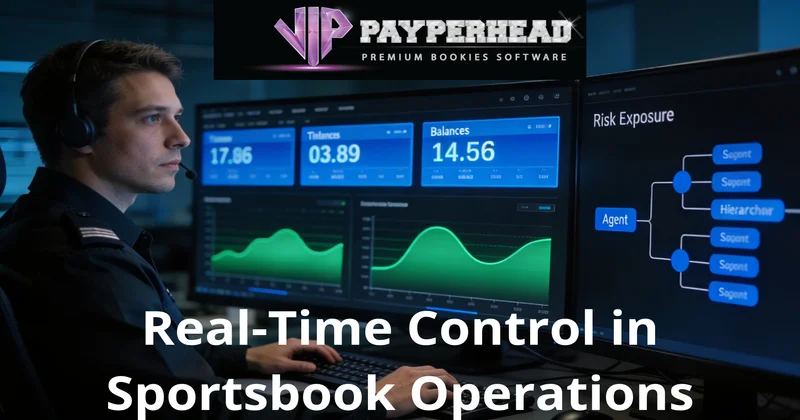
Sportsbook management fundamentals define how operators control money, risk, and people within a structured system. In a Pay Per Head environment, this is not optional. It is the operational core that determines whether a sportsbook remains stable or becomes exposed. Therefore, understanding how these components work together is essential for any operator managing a real sportsbook.
At a fundamental level, sportsbook management is not about betting outcomes. Instead, it is about system control. Operators must manage player balances, agent relationships, and financial exposure in a unified structure. In addition, Core Responsibilities of a Sportsbook Operator outlines the essential duties required to maintain system control. Because of this, every decision must connect to a centralized framework that tracks activity in real time. In practice, this means that money flow, risk monitoring, and agent behavior are always interconnected. For a complete system view, From Bets to Balances: The Full Operational Picture explains how these elements connect operationally. To clarify this operational perspective, operators should review What Running a Sportsbook Actually Means.
Within the context of What Running a Sportsbook Really Involves, this cluster focuses on how operators bring these elements together. Managing money requires strict balance tracking and reporting. At the same time, risk must be monitored across all accounts and agents. However, these tasks cannot be separated. They must function inside one operational system. As a result, sportsbook management fundamentals are about coordination, not isolated actions.
Financial Control Systems as the Core Layer
Money management starts with visibility. Operators must know where funds are at all times. This includes player balances, agent accounts, and overall exposure. In addition, systems must provide real-time updates. Without this, decision-making becomes reactive instead of controlled. For this reason, Pay Per Head platforms are designed to centralize all financial data in one place.
Financial control also defines how money moves within the system. Operators must establish rules for credit limits, balance adjustments, and reporting structures. Because of this, every transaction is tracked and validated. In practice, this ensures that the sportsbook maintains consistency across all accounts. As a result, financial stability becomes predictable and measurable.
Risk Monitoring as a Continuous System Process
Risk management operates in parallel with financial tracking. While money reflects current positions, risk evaluates potential outcomes. Therefore, operators must monitor betting activity continuously. This includes identifying patterns, tracking exposure by market, and controlling limits when needed. At the same time, risk is not managed manually. It is structured through system rules and automated controls.
Because of this, operators rely on predefined parameters. These include betting limits, exposure thresholds, and account restrictions. In practice, these controls prevent imbalance before it occurs. Also, automated monitoring ensures that risk is evaluated in real time. As a result, operators maintain stability even during high activity periods.
Agent Structure and Operational Coordination
People management adds another layer to sportsbook operations. Sportsbooks often operate through agent networks. Because of this, operators must manage relationships, responsibilities, and performance across multiple levels. Each agent represents a segment of the business. Therefore, control systems must define roles, permissions, and financial accountability.
In practice, this creates a structured hierarchy. Master agents oversee sub-agents, while operators maintain centralized control. Because of this, accountability flows through the network. Because of this, Sportsbook Operational Accountability as a Foundation for Control becomes critical for maintaining long-term stability. As well, systems track performance and financial activity at each level. As a result, operators can identify inefficiencies and adjust the structure when needed.
The connection between money, risk, and people defines sportsbook management fundamentals. Money provides the current state. Risk projects future impact. People execute within the system. When these elements are aligned, the sportsbook operates efficiently. However, if one element fails, the entire system becomes unstable.
To understand the broader operational context, operators should review How to Start and Run a Profitable Sportsbook as well as What Running a Sportsbook Really Involves. Besides, related topics such as sportsbook operational accountability and agent network structure provide deeper insights into system coordination.
Ultimately, sportsbook management fundamentals are about control through structure. They are not optional processes. Instead, they are the foundation that allows operators to manage complexity, maintain stability, and prepare for scale.
Executing Sportsbook Management Fundamentals Through Real-Time Systems
Operational execution of sportsbook management fundamentals depends on structured workflows, real-time systems, and clearly defined control layers. In a Pay Per Head environment, operators do not rely on manual processes. Instead, they execute through integrated systems that continuously manage money, risk, and agent activity. Because of this, consistency and speed become the foundation of daily operations.
Execution begins with data flow. Every action inside the sportsbook feeds into the system instantly. This includes wagers, balance updates, and account activity. Therefore, operators always have access to accurate and current information. In practice, this eliminates delays and allows for immediate decision-making. At the same time, Daily Decision-Making in Professional Sportsbooks explores how operators respond to real-time system changes. As a result, sportsbook operations remain stable even during peak activity periods.
Within the framework of What Running a Sportsbook Really Involves, execution connects all operational layers into one continuous process. Financial tracking, risk evaluation, and agent management are not isolated. Instead, they operate simultaneously. Because of this, operators must rely on platforms that unify these functions under one structure.
Real-Time Financial Tracking and Control
Financial execution starts with real-time tracking. Every transaction must be recorded and updated instantly. This includes player balances, agent accounts, and overall system exposure. Because of this, operators maintain full visibility over financial activity at all times. On top of that, dashboards organize this data into actionable insights.
Control systems define how money moves within the sportsbook. Operators set rules for credit limits, balance adjustments, and reporting permissions. Therefore, every transaction follows a predefined structure. In practice, this reduces errors and maintains consistency. As a result, financial management becomes predictable and scalable.
At the same time, reporting tools allow operators to review performance continuously. These tools provide summaries at both player and agent levels. Because of this, operators can identify discrepancies quickly. Not only that, real-time visibility ensures that financial decisions are based on accurate data.
Integrated Risk Management Workflows
Risk management operates alongside financial tracking. As bets are placed, exposure updates automatically. Therefore, operators can monitor risk across markets, events, and agent groups in real time. However, this process is not reactive. Instead, it is driven by predefined system rules that control limits and thresholds.
Operators rely on structured workflows to manage risk efficiently. For example, betting activity triggers exposure calculations. Then, system rules evaluate whether limits are exceeded. If necessary, controls adjust automatically. Because of this, risk is managed consistently across the platform. In practice, this prevents imbalance before it escalates.
Automation plays a critical role in this process. Manual monitoring cannot keep up with real-time activity. Therefore, systems must handle calculations and adjustments instantly. In addition, alerts notify operators when unusual patterns occur. As a result, operators maintain control without constant manual intervention.
Agent Hierarchy and Operational Control
Agent-based structures require clear hierarchy and control. Operators must define roles, permissions, and responsibilities across the network. Master agents oversee sub-agents, while operators maintain centralized authority. Because of this, financial accountability flows through each level of the hierarchy.
Control systems manage how agents interact with the platform. This includes access to balances, reporting tools, and account management features. Therefore, each agent operates within defined limits. In practice, this ensures that the system remains organized and scalable. As a result, operators can manage large networks efficiently.
Performance tracking is also essential. Operators must evaluate agent activity, volume, and financial performance. Because of this, reporting tools provide detailed metrics for each level. Another key point is that these insights allow operators to identify inefficiencies and adjust the structure when needed.
To align execution with broader operations, operators should connect this process with How to Start and Run a Profitable Sportsbook and What Running a Sportsbook Really Involves. Not only that, related topics such as sportsbook workflow structure and real-time execution systems provide deeper insights into operational efficiency.
Ultimately, operational execution transforms sportsbook management fundamentals into daily action. It ensures that money, risk, and people are managed within a controlled and automated environment. Because of this, operators can maintain stability, improve efficiency, and support long-term growth.
Scaling Sportsbook Management Fundamentals with Automation and Infrastructure
Optimization and scale within sportsbook management fundamentals require a transition from control to efficiency. Once operational workflows are stable, operators must refine performance, eliminate friction, and prepare the system for growth. Because of this, optimization focuses on automation, data analysis, and infrastructure scalability inside a Pay Per Head environment.
At this stage, the goal is not simply to maintain operations. Instead, it is to improve how money, risk, and agent networks perform under increasing volume. Therefore, operators must rely on systems that support continuous monitoring and adjustment. In practice, this allows the sportsbook to evolve without losing control. As a result, optimization becomes a structured process rather than a reactive response.
Within the context of What Running a Sportsbook Really Involves, optimization connects execution with long-term growth. It ensures that all operational layers function efficiently as the business expands. On top of that, it reinforces the importance of system integration and centralized control. Because of this, sportsbook management fundamentals extend beyond daily operations into strategic scalability.
Data-Driven Performance Optimization
Optimization begins with data visibility. Operators must analyze performance across financial activity, risk exposure, and agent operations. Therefore, advanced reporting tools are essential. These tools provide insights into trends, inefficiencies, and system behavior. Because of this, operators can identify areas that require adjustment.
In practice, data-driven decisions improve operational efficiency. For example, identifying patterns in activity allows operators to refine system rules. In addition, performance metrics highlight areas where processes can be streamlined. As a result, the sportsbook operates more efficiently without increasing complexity.
Continuous monitoring supports this process. Operators must review data regularly and adjust controls accordingly. Because of this, optimization becomes an ongoing activity rather than a one-time adjustment. Besides, real-time dashboards provide immediate feedback on system performance.
Automation and Workflow Efficiency
Automation is critical for scaling sportsbook operations. As volume increases, manual processes become inefficient and unreliable. Therefore, operators must rely on automated systems to handle repetitive tasks. This includes balance updates, exposure calculations, and reporting generation. Because of this, the system maintains consistency even as activity grows.
Workflow efficiency improves when processes are standardized. Operators must define clear procedures for financial control, risk management, and agent operations. In practice, this reduces variability and ensures that all actions follow the same structure. As a result, operations remain predictable and manageable.
Integration enhances automation. Systems must connect seamlessly to ensure data flows without interruption. Because of this, operators can manage all aspects of the sportsbook from a single platform. As well, integration reduces duplication and minimizes errors. This is essential for maintaining control at scale.
Scalable Infrastructure and Network Expansion
Scalability depends on infrastructure. Pay Per Head platforms are designed to support growth without increasing operational complexity. Therefore, operators can expand agent networks, add players, and increase activity without restructuring the system. Because of this, scaling becomes a controlled process.
Agent network expansion requires structured management. Operators must evaluate performance, define accountability, and adjust hierarchy when needed. In practice, this ensures that growth does not compromise efficiency. As a result, the network remains organized and productive.
Risk scalability is also essential. As the sportsbook grows, exposure increases. Therefore, risk controls must adapt to higher volume. Because of this, operators must refine limits, thresholds, and monitoring systems. In addition, automated alerts help maintain stability during expansion.
To support long-term growth, operators should connect optimization strategies with How to Start and Run a Profitable Sportsbook and What Running a Sportsbook Really Involves. Also, related topics such as sportsbook automation tools and operational accountability provide deeper insights into system improvement.
In conclusion, optimization transforms sportsbook management fundamentals into a scalable framework. It ensures that the system operates efficiently under increasing demand. Because of this, operators can expand confidently while maintaining full control.
SCALE WITH FULL CONTROL
If you want to optimize and scale your sportsbook with precision, you need infrastructure built for operators.
VIP Pay Per Head provides full control over money, risk, and agent networks in one unified system.
Request a demo today and experience how a professional Pay Per Head platform can help you automate operations, improve efficiency, and scale without losing control.