
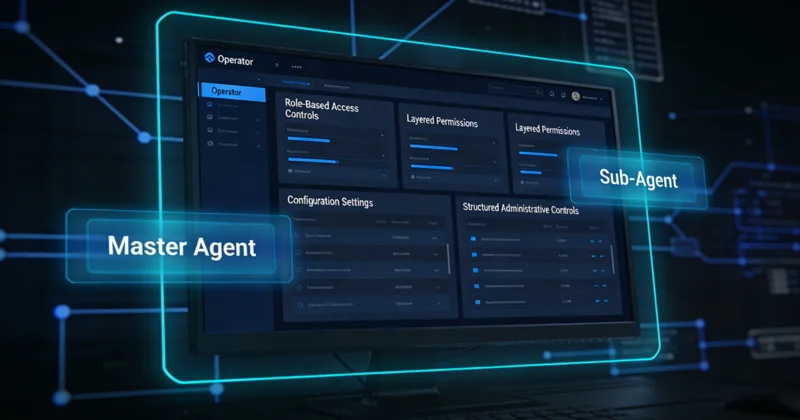
Operator control pay per head defines the real authority a sportsbook operator holds inside the platform. Many systems claim flexibility. However, real control depends on backend structure, clear permissions, and enforced workflows.
For operators evaluating Pay Per Head software, administrative authority is not decorative. Instead, it shapes oversight, improves clarity, and supports long-term growth. Without structured control layers, platforms create friction. As a result, visibility decreases and management becomes reactive.
This explains how operator control pay per head functions at the software level. It focuses only on platform features, administrative workflows, and system-based authority rules.
It does not cover financial modeling, settlement processes, or commission formulas. Instead, it concentrates exclusively on administrative authority at the platform level.
Rather, this article explains how modern platforms implement:
Pay per head admin controls
Sportsbook backend permissions
Operator dashboard tools
Role-based access sportsbook software
Master agent control panel visibility
Sportsbook configuration settings
Understanding these components helps operators evaluate platform maturity before selecting a provider.
What Operator Control Pay Per Head Means at the Platform Level
Operator control pay per head refers to structured authority inside the software. In other words, it defines how the system assigns access, enforces permissions, and protects boundaries.
In modern systems, authority is not improvised. Instead, the platform architecture defines it clearly.
This means:
Administrative actions follow predefined rules
Access levels operate through system logic
Backend permissions stay consistent across accounts
Visibility adjusts automatically by role
As a result, the operator does not depend on manual supervision. Instead, the software enforces governance through structured backend permissions.
Consequently, sportsbook backend permissions play a critical role.
Without clear permission frameworks, platforms blur boundaries between operator, master agent, and sub-agent roles. Consequently, oversight weakens as networks expand.
Modern pay per head admin controls solve this issue by embedding authority directly into the software layer.
Administrative Architecture vs. Surface-Level Controls
A strong agent network architecture in pay per head software keeps authority, data, and visibility aligned as networks grow. Therefore, operators gain control without micromanagement and flexibility without disorder.
To ensure structural integrity, true operator control pay per head requires:
System-enforced role-based access sportsbook software
Clear permission separation
Backend audit visibility
Controlled configuration layers
For example, a professional operator dashboard tool should do more than display data. Instead, it should:
Control who can change settings
Restrict access to sensitive areas
Record administrative actions
Maintain authority boundaries automatically
If a platform allows open backend editing, it increases operational risk. Over time, this creates inconsistency across agent levels.
Therefore, sportsbook configuration settings must remain centralized under operator authority.
The platform must separate:
- Viewing rights
- Editing rights
- Administrative override rights
Without that separation, long-term scalability becomes fragile.
Role-Based Access in Sportsbook Software
Role-based access sportsbook software represents the foundation of administrative discipline. It determines how authority flows through the system without compromising operator control.
In contrast to assigning broad permissions manually, modern systems define roles with embedded limitations.
For example, these roles typically include:
- Operator-level authority
- Master agent visibility
- Sub-agent operational access
- Account-level management layers
However, the system must ensure that higher roles maintain structural oversight while lower roles operate within predefined boundaries.
This architecture protects operator control pay per head from fragmentation.
For example, a master agent control panel may allow account management. However, it should never allow global configuration changes. This boundary protects system integrity.
In addition, backend permissions must not depend on trust alone. The software must enforce them automatically.
As a result, operators gain:
Predictable system behavior
Less manual monitoring
Clear authority structure
Stable growth as networks expand
Ultimately, this benefit is not superficial. By contrast, it strengthens long-term stability.
Operator Dashboard Tools as Command Infrastructure
Operator dashboard tools act as the command interface of the platform. However, their effectiveness depends on backend integration depth.
A well-structured dashboard does more than display metrics. It provides structured administrative control over:
- System configuration modules
- Agent access adjustments
- Permission assignments
- Backend account status management
Furthermore, dashboards should reflect real-time system states without requiring external tools.
If operators must rely on spreadsheets. As a result, control becomes fragmented.
Therefore, effective operator control pay per head requires dashboards that integrate:
- Permission management
- Account-level controls
- System configuration oversight
- Role-based visibility
These features reduce operational friction and strengthen administrative clarity.
Centralized Sportsbook Configuration Settings
Sportsbook configuration settings define how the platform behaves structurally. These settings may include system parameters, account restrictions, or operational limits.
However, configuration authority must remain centralized under operator control. Otherwise, structural drift becomes inevitable.
When platforms distribute configuration access loosely, they create systemic risk. Over time, inconsistent settings cause instability across agent networks.
Modern pay per head admin controls prevent this by:
- Locking configuration rights at operator level
- Isolating agent-level permissions
- Maintaining system-wide consistency
As a result, the operator retains structured authority without interfering in daily operational flow. This separation strengthens scalability.
Structural Oversight & Authority Enforcement
Operator control pay per head does not end with permission assignment. True administrative authority requires structured visibility, system-enforced boundaries, and layered oversight across the entire backend environment.
While dashboards display information, At the same time, backend architecture determines who can act, who can modify, and who can override.
In this section, we examine how modern Pay Per Head software protects operator authority through:
- Master agent control panel limitations
- Layered backend visibility
- Administrative audit logic
- Override governance mechanisms
- Structural risk containment through system design
Master Agent Control Panel vs Operator Authority
The master agent control panel represents an operational workspace. However, it must never function as a parallel authority layer.
Operator control pay per head requires strict separation between operational access and platform-level authority.
In well-designed sportsbook software:
- Master agents manage accounts within predefined limits
- Agents cannot modify global sportsbook configuration settings
- System-wide permissions remain operator-restricted
- Platform architecture enforces authority isolation
If this separation fails, agent-level access expands beyond operational scope. Over time, this erodes administrative clarity.
Therefore, to preserve structured authority, role-based access sportsbook software must prevent the following actions.
First, it must block cross-level configuration changes.
Second, it must stop permission increases across roles.
Finally, it must restrict backend changes by non-operator accounts.
In addition, a modern system protects operator control by setting clear limits directly inside the platform. As a result, the software enforces authority automatically. Therefore, it does not depend on manual supervision or informal rules.
This distinction becomes critical as networks scale.
As agent layers grow, complexity also increases. Therefore, the system must enforce authority automatically rather than rely on manual control.
Layered Backend Visibility & Administrative Clarity
Sportsbook backend permissions should not only restrict actions. They must also structure visibility logically.
Layered visibility ensures that:
- Operators see full system data
- Master agents see network-relevant data only
- Sub-agents access account-specific information
- Cross-layer data remains isolated
When visibility flows without boundaries, confusion appears. Agents may see information that does not relate to their operational scope. As a result, oversight becomes noisy.
Operator control pay per head strengthens when backend systems segment data structurally.
This segmentation improves:
- Administrative clarity
- Workflow predictability
- Decision accuracy
- Platform governance
Moreover, operator dashboard tools should reflect these visibility layers dynamically. The interface must adapt based on permission logic defined at the backend.
If the dashboard does not reflect backend rules, inconsistencies emerge.
Therefore, administrative clarity depends on unified system logic.
Administrative Audit Logic & Action Traceability
Furthermore, a key part of operator control pay per head is the ability to track system actions clearly.
Modern Pay Per Head platforms should include structured audit logic that tracks:
- Permission changes
- Configuration adjustments
- Account-level modifications
- Administrative overrides
Audit systems protect operator authority in two ways. Specifically, they increase accountability and provide structured traceability.
First, they increase accountability across roles. Second, they provide structured visibility into system behavior.
Without traceability, operators must rely on manual investigation when discrepancies appear.
However, when the software logs actions automatically, administrative risk decreases significantly.
For example:
- If a role change occurs, the system records it
- If configuration settings adjust, the action becomes traceable
- If account permissions shift, the change remains visible
This transparency reinforces backend discipline.
Furthermore, audit logic should operate passively in the background. It should not require constant supervision.
This automation protects operator control pay per head without increasing operational workload.
Override Governance Without Structural Weakness
Override mechanisms require careful design.
Operators often need emergency-level authority to correct or adjust system behavior. However, unrestricted override capabilities can weaken platform integrity.
Therefore, structured override governance becomes essential.
In advanced sportsbook software:
- Override authority remains exclusive to operator-level roles
- Temporary adjustments follow predefined workflows
- System logs capture override activity automatically
- Override permissions cannot cascade downward
This architecture ensures that flexibility does not compromise structure.
Additionally, override design must avoid ambiguity.
If override rights remain loosely defined, backend permissions blur. Consequently, operator authority loses precision.
Modern pay per head admin controls solve this by embedding override rules into the permission framework itself.
Administrative Risk Containment Through Software Design
Operator control pay per head ultimately serves one purpose: containment of administrative risk.
Risk, in this context, refers to:
- Unauthorized access
- Configuration drift
- Permission overlap
- Backend inconsistency
- Authority fragmentation
Software architecture must contain these risks structurally.
Instead of reacting to problems after they occur, modern platforms prevent them through:
- Role-based access sportsbook software
- Centralized sportsbook configuration settings
- Backend permission isolation
- System-enforced workflow logic
As a result, operators maintain structured authority even as networks expand.
Importantly, this article does not address financial risk modeling or exposure calculations. Those topics belong to the Risk Management pillar.
Here, we focus strictly on platform governance mechanics.
Operator control pay per head strengthens when the system itself enforces boundaries. When software defines authority clearly, administrative complexity remains manageable.
This is the difference between platforms that scale and platforms that fragment.
Control Scalability as Agent Networks Expand
As agent structures increase in size, backend interactions multiply. Without structured authority controls, operators face:
- Permission overlap
- Visibility confusion
- Inconsistent configuration states
- Manual intervention requirements
However, when role-based access sportsbook software defines authority clearly, expansion does not disrupt governance.
Scalable operator control pay per head depends on:
- Fixed role logic that does not change with volume
- Centralized sportsbook configuration settings
- Permission inheritance that respects hierarchy
- Automated enforcement of backend boundaries
For example, when a new master agent joins the network, the system should assign predefined access automatically. The operator should not redesign the permission structure manually.
This automation reduces friction and protects long-term stability.
Moreover, scalable systems avoid permission drift. Consequently, operators maintain structural clarity as a result, operators maintain structural clarity even when operations accelerate.
Workflow Automation Reinforces Administrative Authority
Administrative control does not exist in isolation. It connects directly to workflow automation.
When operator dashboard tools integrate workflow logic, the platform executes repetitive tasks consistently. This reduces dependency on manual oversight.
For instance, workflow automation can support:
- Role assignment processes
- Access modification rules
- Configuration update propagation
- Account status management
If the system requires manual synchronization across roles, authority weakens. Over time, operational gaps appear.
Therefore, operator control pay per head strengthens when workflow execution follows backend permission rules automatically.
Automation ensures that:
- Configuration changes apply system-wide
- Role updates reflect immediately
- Visibility adjustments remain consistent
- Administrative logic remains predictable
This integration between workflow and permission design separates mature platforms from fragmented ones.
When evaluating Pay Per Head software, operators should examine administrative architecture directly.
Rather than focusing on interface appearance, evaluation should address:
- How does the platform define sportsbook backend permissions?
- Does role-based access operate through system logic or manual settings?
- Are sportsbook configuration settings centralized under operator authority?
- Does the master agent control panel have strict structural limits?
- Are administrative actions traceable through audit mechanisms?
These questions clarify backend maturity.
Additionally, operators should verify whether the platform enforces authority automatically. If the system relies heavily on procedural discipline otherwise of technical enforcement, scalability becomes fragile.
True operator control pay per head depends on software structure, not policy documents. In short, governance must be technical, not procedural.
Comparison Logic: Structured Authority vs Reactive Oversight
Operators comparing platforms should look for signs of reactive oversight.
For example, reactive systems often show these characteristics:
- Broad permission access
- Limited visibility segmentation
- Manual configuration adjustments
- Weak audit traceability
- Overlapping authority between roles
By contrast, structured systems demonstrate:
- Clearly defined pay per head admin controls
- Layered sportsbook backend permissions
- Isolated master agent control panel rights
- Automated role enforcement
Centralized operator dashboard tools
Why VIP Pay Per Head Prioritizes Administrative Authority
VIP Pay Per Head structures its platform around controlled backend governance.
Administrative authority operates through:
- Centralized operator-level configuration
- Enforced role-based access sportsbook software
- Structured sportsbook backend permissions
- Defined master agent control panel limitations
- Integrated operator dashboard tools
This architecture supports long-term scalability while preserving clarity.
Most importantly, the platform embeds authority into the system design. It does not rely on reactive adjustments or manual supervision.
Administrative Authority Defines Platform Strength
Ultimately, operator control pay per head determines whether a sportsbook scales with discipline or fragments under growth. Operator control pay per head determines whether a sportsbook platform scales with discipline or fragments under growth.
Modern administrative authority requires:
- Structured permission frameworks
- Centralized configuration control
- Automated workflow enforcement
- Layered backend visibility
- Clear separation between operator and agent access
This cluster does not address settlement logic, pricing models, or financial calculations. Instead, it clarifies how platform architecture protects operator authority at scale.
For operators evaluating Pay Per Head software, administrative control is not optional. It is foundational.
Therefore, if you want to evaluate structured backend authority in action, for that reason, if you want to evaluate structured backend authority in action request a platform walkthrough.
Administrative authority should never depend on manual supervision. With VIP Pay Per Head, operator control is embedded directly into the software architecture.
Request a demo on our private platform walkthrough and see how structured backend permissions, role-based access controls, and centralized configuration settings operate in real time.